

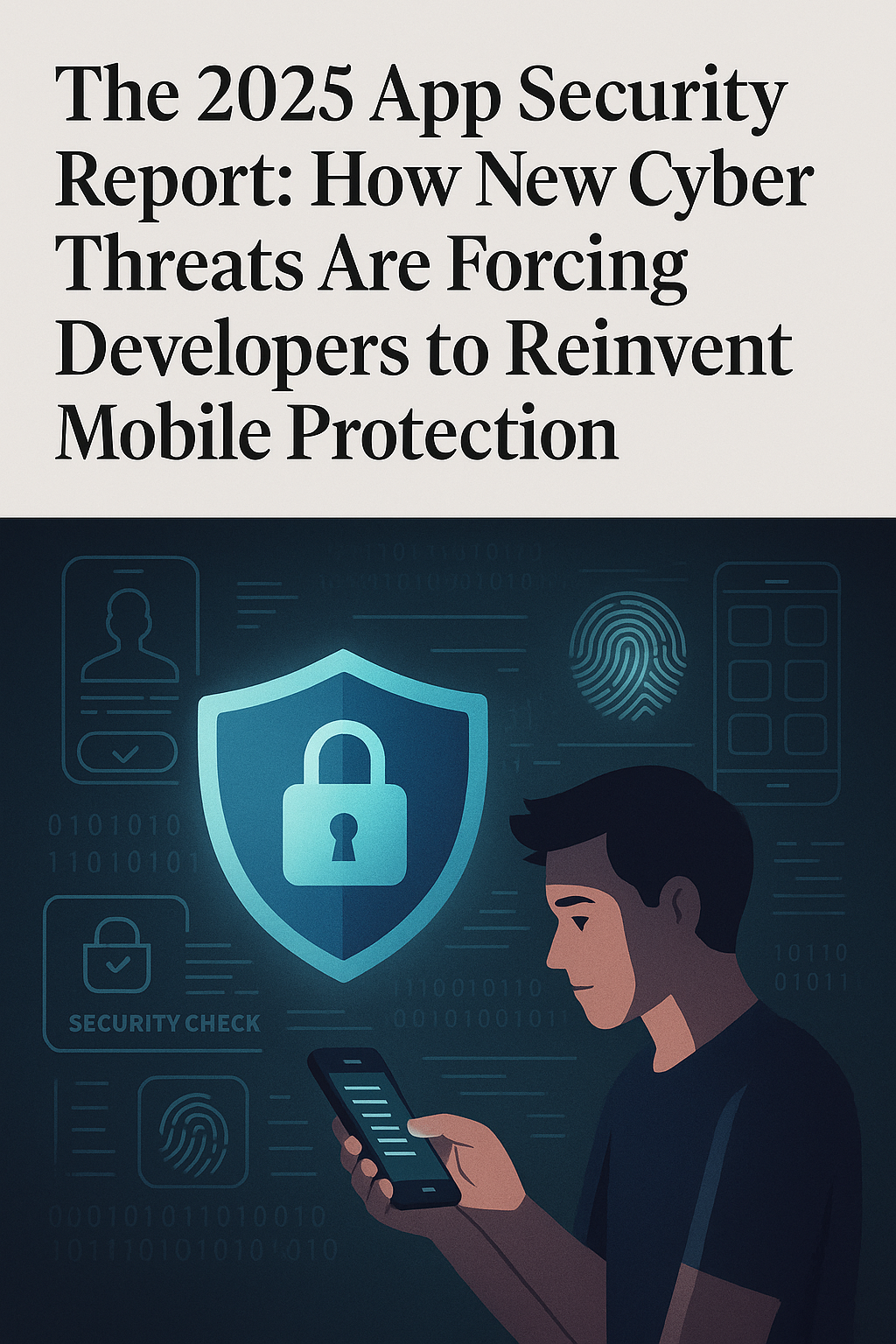
Mobile app security has entered a critical turning point.
With over 7.2 billion active smartphone users worldwide and an explosion of AI-powered malware, 2025 has seen a dramatic rise in sophisticated cyberattacks targeting everyday applications.
From finance and messaging to health and productivity apps, developers are being forced to adopt the most advanced protection measures in mobile history.
This is the state of app security in 2025 — and the changes reshaping the industry.
1. AI-Powered Malware Is the Fastest-Growing Threat
Attackers are using generative AI to build:
- adaptive phishing tools
- polymorphic malware (changes shape to avoid detection)
- deepfake-based scam apps
- automated exploit kits
These attacks evolve in real time, making traditional defenses obsolete.
2. Zero-Trust Mobile Frameworks Become Standard
Developers now implement:
- continuous identity checks
- real-time risk scoring
- session verification
- permission isolation
Apps no longer “trust” a user simply because they logged in once.
3. Encrypted Local Processing Protects Sensitive Data
More apps are moving to on-device AI, ensuring:
- private data never leaves the phone
- cloud servers can’t store user conversations
- biometric authentication remains local
This trend is strong in messaging, banking, and health apps.
4. Secure AI Models Are a New Priority
2025 introduced “AI Supply Chain Attacks,” where hackers target:
- training datasets
- model weights
- AI inference APIs
To counter this, apps now rely on:
- signed model packages
- tamper-proof build systems
- transparent model audit logs
5. Multi-Layer Encryption Is Becoming Mandatory
Developers are adopting:
- end-to-end encryption
- session key rotation
- database encryption at rest
- quantum-resistant algorithms (early deployments)
Messaging and fintech apps lead this transformation.
6. Behavioral Biometrics Enhance Authentication
Apps now verify identity using:
- grip patterns
- typing rhythm
- swipe behavior
- app usage signatures
Stolen passwords alone can no longer unlock an app.
7. App Stores Tighten Their Security Policies
Google and Apple introduced:
- mandatory AI watermarking
- sensitive-data labeling
- stricter permissions audits
- automated code scanning for hidden SDKs
- runtime behavioral monitoring
Millions of unsafe apps have been removed in early 2025.
8. Security Dashboards Become a Consumer Feature
Users now see:
- data-sharing breakdowns
- permission history
- real-time security alerts
- risk ratings for installed apps
This transparency is reshaping user expectations.
9. “Hyper-Personalized Attacks” Are on the Rise
Cybercriminals use AI to target individuals by analyzing:
- social media
- email patterns
- messaging tone
- location trends
This greatly increases the success rate of phishing attacks — and forces developers to build smarter, preventative defenses.
10. Developers Are Turning to Autonomous Security Agents
The newest trend is AI agents trained to patch vulnerabilities, capable of:
- scanning code
- identifying weak points
- applying security fixes
- monitoring unusual API calls
Security is shifting from reactive to proactive.
The Bottom Line
2025 is the year mobile security became an arms race.
As AI-powered threats grow more sophisticated, only apps built with zero-trust frameworks, strong encryption, and autonomous protection systems will stay ahead.
Cybersecurity is no longer an added feature — it’s the backbone of modern app development.
Leave a Reply