

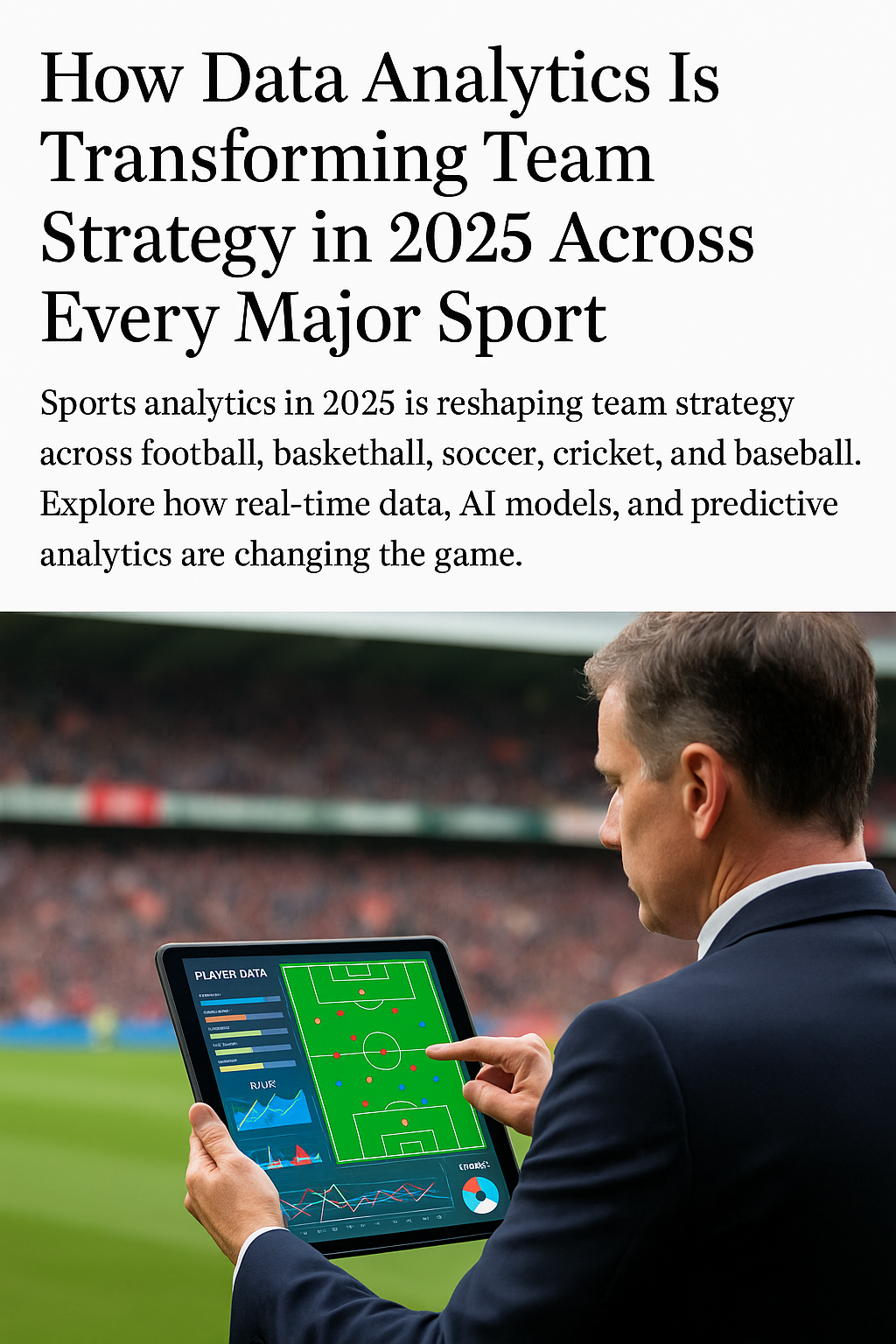
Modern sports teams are no longer relying solely on instinct, experience, and tradition.
In 2025, data analytics has become the backbone of team strategy, influencing everything from player selection to in-game decisions.
With AI-powered tools, advanced tracking, and predictive modeling, every major sport is being transformed.
Here is how analytics is redefining competitive strategy for teams worldwide.
1. Real-Time Tracking Sensors Are Revolutionizing Live Strategy
Elite teams now use sensor-based systems that track:
- speed
- micro-acceleration
- jump height
- pass trajectories
- fatigue levels
- spacing and formations
Coaches receive real-time dashboards indicating optimal shifts in formation and substitutions.
This is especially impactful in:
- soccer
- basketball
- American football
- rugby
2. Predictive Models Determine the Best Lineups
AI models simulate thousands of match scenarios, allowing coaches to decide:
- which player combinations produce the highest win probability
- ideal rotations
- counter-strategy matchups
- optimized defensive pairings
Data-backed lineup decisions outperform intuition alone.
3. AI-Assisted Scouting Is More Accurate Than Ever
Teams now scout players using:
- biomechanical analysis
- skill heatmaps
- efficiency ratings
- risk-of-injury predictions
- personality and behavior modeling
This next-gen scouting reduces bad signings and improves player development.
4. Opponent Behavior Modeling Creates Smarter Game Plans
AI systems break down an opponent’s tendencies, such as:
- preferred attack lanes
- weak defensive zones
- play patterns
- timing habits
- high-probability shot locations
These insights allow teams to neutralize opponents before games even begin.
5. Analytics Is Changing How Coaches Manage Substitutions
Instead of guessing when a player is tired or slowing down, analytics tools track:
- metabolic fatigue
- movement efficiency drops
- reaction-time decline
- micro-movement deterioration
This leads to optimal rotation timing — saving stars for crucial game phases.
6. Game Simulators Predict the Best Tactical Decisions
AI-powered simulators now evaluate coaching decisions such as:
- when to press
- when to counterattack
- optimal pitch placement
- set-piece strategies
- defensive switching
Teams simulate millions of scenarios before choosing their game plan.
7. Injury Prevention Is Now Strategy, Not Just Medicine
Analytics platforms warn coaches when an athlete is approaching:
- overload stress
- tendon risk thresholds
- hydration imbalance
- dangerous movement asymmetry
Preventing injuries is now a crucial part of competitive strategy.
8. Fans Are Getting Access to Analytics Too
Sports broadcasts now include:
- live shot probability
- momentum graphs
- possession heat maps
- attack flow diagrams
- predictive final score models
Fans understand the game on a deeper strategic level than ever.
9. Data Is Transforming Sports Betting and Fantasy Leagues
Analytics tools inform:
- odds modeling
- fantasy lineup optimization
- performance projections
- injury likelihood probabilities
Sports betting in 2025 is deeply tied to data accuracy.
10. The Data Arms Race Is Changing the Future of Sports
Teams investing heavily in analytics are seeing:
- higher win rates
- fewer injuries
- better draft choices
- more efficient training programs
Data has become a competitive weapon — and teams that ignore it fall behind.
The Bottom Line
In 2025, analytics is no longer a supplement — it is central to how teams train, strategize, and compete.
From predictive modeling to real-time tactical adjustments, data is reshaping sports at every level.
The future of competition belongs to the teams that understand the numbers.
Leave a Reply