

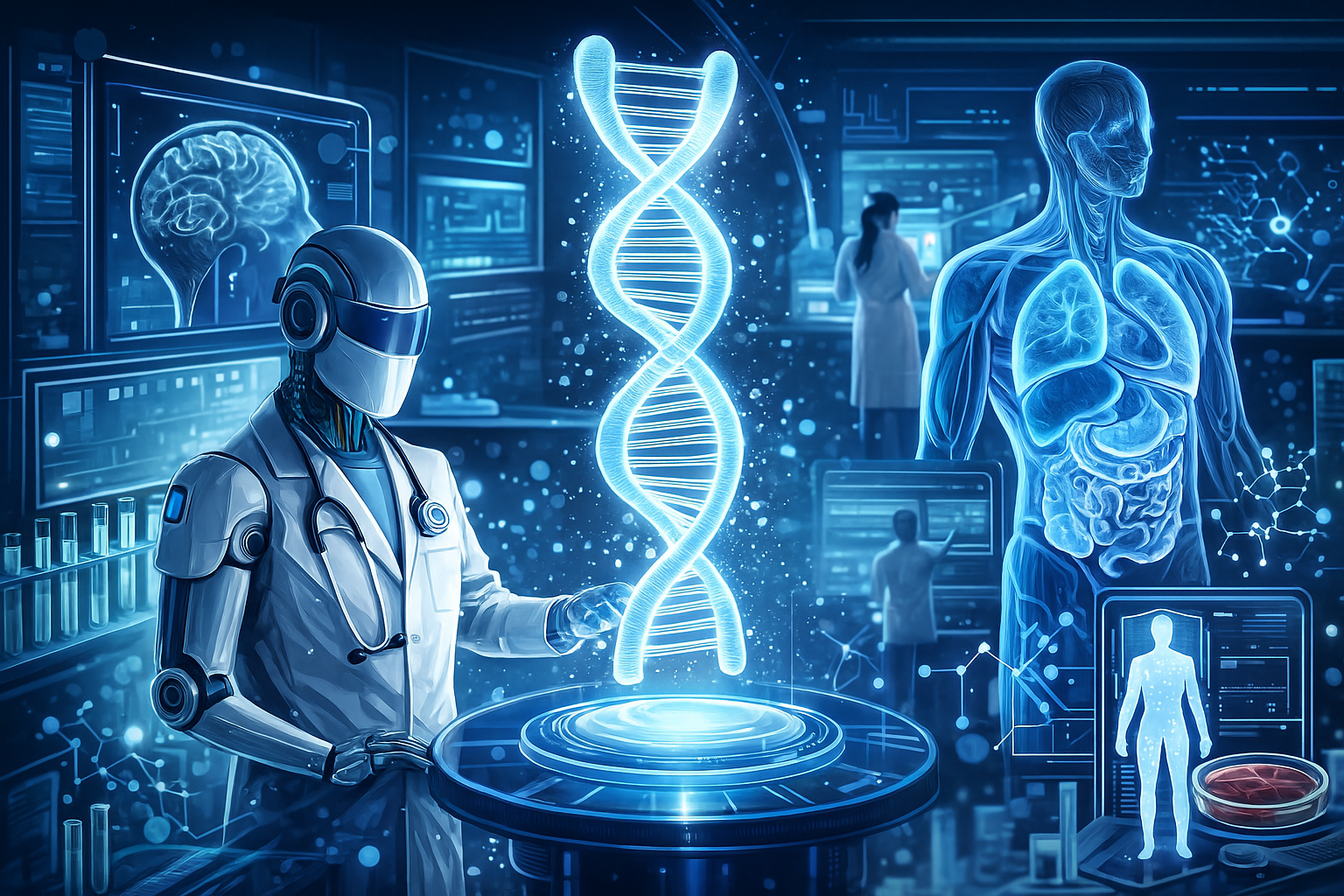
Biotechnology is advancing faster in 2025 than at any point in modern history.
Driven by AI, gene editing, regenerative medicine, and nanotechnology, scientists are making breakthroughs that were once considered impossible — and many of them are already entering clinical practice.
This year marks the dawn of a new era: medicine that is personalized, predictive, and regenerative.
Here are the biotech breakthroughs defining 2025.
1. AI-Driven Diagnostics Are Surpassing Human Accuracy
AI medical systems now outperform human specialists in:
- early cancer detection
- cardiovascular risk prediction
- dermatology analysis
- brain-scan interpretation
- rare disease identification
Real-time AI triage tools are now used in emergency rooms worldwide, reducing delays and improving survival rates.
2. Regenerative Medicine Takes a Massive Leap Forward
2025 brings major progress in:
- lab-grown skin grafts
- stem-cell bone regeneration
- cartilage restoration for joint injuries
- early-stage spinal tissue repair
Several treatments move from experimental status to approved therapies, helping millions with chronic injuries.
3. Synthetic Organs Are Moving Toward Real-World Use
Bioengineered organs grown from patient cells are now in:
- advanced preclinical trials
- early transplant compatibility tests
- long-term rejection-free simulations
These organs drastically reduce the need for donor waiting lists — and early results are extremely promising.
4. CRISPR Gene Therapies Expand to New Conditions
After the historic approvals in 2024, CRISPR therapies in 2025 are targeting:
- cystic fibrosis
- muscular dystrophy
- hereditary heart disorders
- immune system deficiencies
The new CRISPR 3.0 editing system is more precise and significantly safer.
5. Nanomedicine Enables Targeted, Low-Dosage Treatments
Nanoparticle-based delivery systems can now:
- deliver drugs directly to tumors
- cross the blood-brain barrier
- release medication on a timed schedule
- reduce side effects by 70%
This is revolutionizing treatment for cancer and neurological conditions.
6. Digital Twins Are Transforming Personalized Medicine
Doctors can now simulate how a treatment will affect an individual before administering it.
Digital twin technology models:
- metabolism
- organ function
- immune response
- genetic traits
Personalized medicine is becoming standard for high-risk patients.
7. Wearable Biosensors Provide Continuous Health Monitoring
New-generation wearables track:
- blood pressure
- glucose levels
- cortisol (stress)
- hydration
- respiration
- early infection biomarkers
These data streams feed directly into AI platforms that send early warnings before symptoms appear.
8. Microbiome Therapies Show Strong Clinical Results
Microbiome science delivers breakthroughs in:
- gut inflammation
- autoimmune disorders
- skin conditions
- metabolic diseases
Engineered probiotic therapies are one of 2025’s most exciting biotech categories.
9. Lab-Grown Food Is Becoming Nutritionally Tailored
Biotech labs now produce:
- protein-enhanced cultured meat
- low-cholesterol dairy alternatives
- vitamin-optimized plant substitutes
Food designed by biology — not farming — is expanding rapidly.
10. The Convergence of AI + Biotech Is Accelerating Discovery
2025’s most influential trend is the merging of:
- large biological datasets
- quantum simulations
- AI-powered drug discovery
- automated lab robotics
This convergence is enabling breakthroughs years faster than traditional research methods.
The Bottom Line
2025 is the year biotech shifts from futuristic to foundational.
AI diagnostics, regenerative therapies, nanomedicine, gene editing, and synthetic organs are defining a new medical era — one where treatments are precise, personalized, and far more effective.
Medicine isn’t just improving — it’s being reinvented.
Leave a Reply