

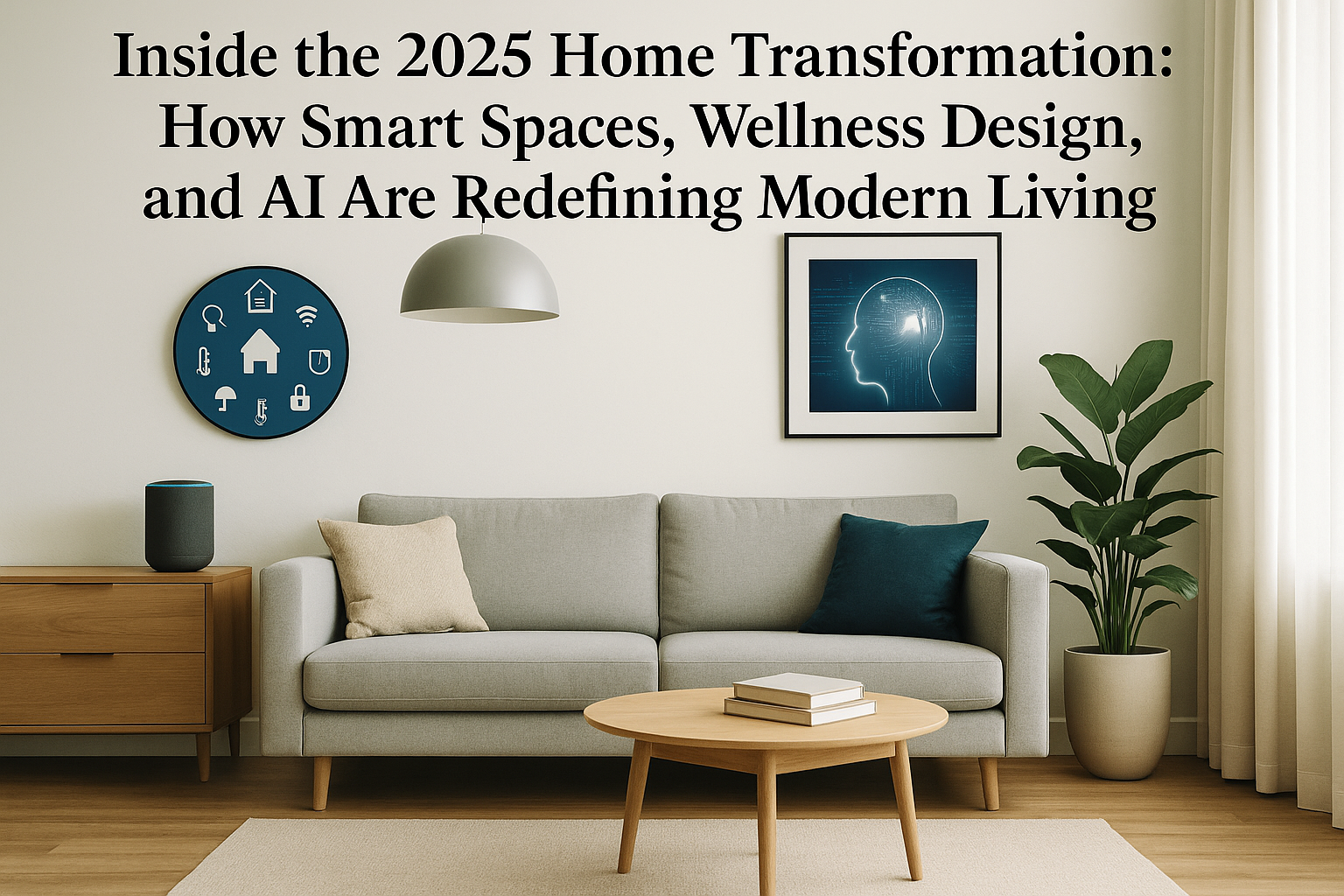
The home has become the new center of life — and in 2025, it’s undergoing a revolution.
Driven by smart technology, sustainability, and wellness-focused design, modern households are transforming into spaces that support productivity, relaxation, and long-term well-being.
Here’s how homes are evolving in 2025 and why these changes are redefining the way people live.
1. The Rise of Wellness-Centered Home Design
Home design is shifting away from aesthetics alone and toward holistic well-being.
Key 2025 trends include:
- circadian lighting
- air-purifying indoor greenery
- noise-reduction layouts
- natural material palettes
- meditation corners and calm spaces
The focus is on creating environments that support mental and physical health.
2. The “Smart-But-Invisible” Technology Movement
Tech is becoming quieter, cleaner, and less intrusive.
Homes now include:
- hidden smart hubs
- voice-free gesture controls
- low-light AI sensors
- subtle automation triggers
- ambient smart speakers embedded in walls
Instead of being surrounded by gadgets, people want homes where technology works behind the scenes.
3. AI Runs the Daily Household Routines
AI is no longer a novelty — it’s the backbone of the modern home.
People rely on AI for:
- temperature automation
- utility optimization
- grocery tracking
- personalized cooking suggestions
- cleaning schedules for robot appliances
- predictive maintenance alerts
AI eliminates daily friction and frees up mental space.
4. Modular Living Spaces Are Becoming Essential
With work, rest, exercise, and hobbies converging in one space, homes are adopting hybrid designs.
Examples include:
- foldaway offices
- multipurpose living spaces
- convertible guest rooms
- movable wall panels
- dual-purpose furniture
Modular design is helping people maximize smaller homes.
5. Kitchens Are Turning Into Smart Nutrition Centers
The kitchen has evolved into a hub for health optimization.
2025 kitchen features:
- auto-tracking smart fridges
- step-by-step AI cooking assistants
- nutritional analytics
- waste-reducing inventory planning
- smart appliances that communicate with one another
Cooking is faster, healthier, and more intentional.
6. Energy Efficiency Is Now a Default Expectation
Rising energy costs and sustainability demands have created a new standard.
Homes now use:
- solar-powered appliances
- high-efficiency climate systems
- smart consumption dashboards
- battery-integrated walls
- heat-recycling ventilation
People want homes that save money and reduce environmental impact.
7. Home Security Is Becoming Smarter — and More Private
Security systems are shifting from cameras everywhere to privacy-focused sensors.
2025 innovations include:
- AI motion tracking
- encrypted door systems
- facial recognition vault access
- neighborhood mesh networks
- zero-cloud local authentication
Safety now comes with a strong privacy guarantee.
8. Indoor Fitness Is Being Reinvented
Homes now include adaptive fitness environments:
- foldable smart fitness panels
- posture-correcting workout cameras
- personalized AI fitness plans
- compact resistance equipment
- VR-enhanced training sessions
Wellness and convenience are merging seamlessly.
9. Outdoor Spaces Are Becoming Part of the Wellness Ecosystem
Even small outdoor areas are being optimized.
Popular upgrades:
- balcony gardens
- smart irrigation
- outdoor work nooks
- light-therapy seating areas
- micro-gardens with automated soil monitoring
Nature integration is one of 2025’s strongest lifestyle trends.
10. The Home Is Now the Ultimate Personal Ecosystem
The modern home is no longer just a place to sleep — it’s a wellness center, workspace, entertainment hub, nutrition system, and digital assistant all in one.
The home of 2025 is:
- smarter
- healthier
- more adaptive
- more sustainable
- deeply personalized
People are living better because their homes are working with them, not against them.
Leave a Reply