

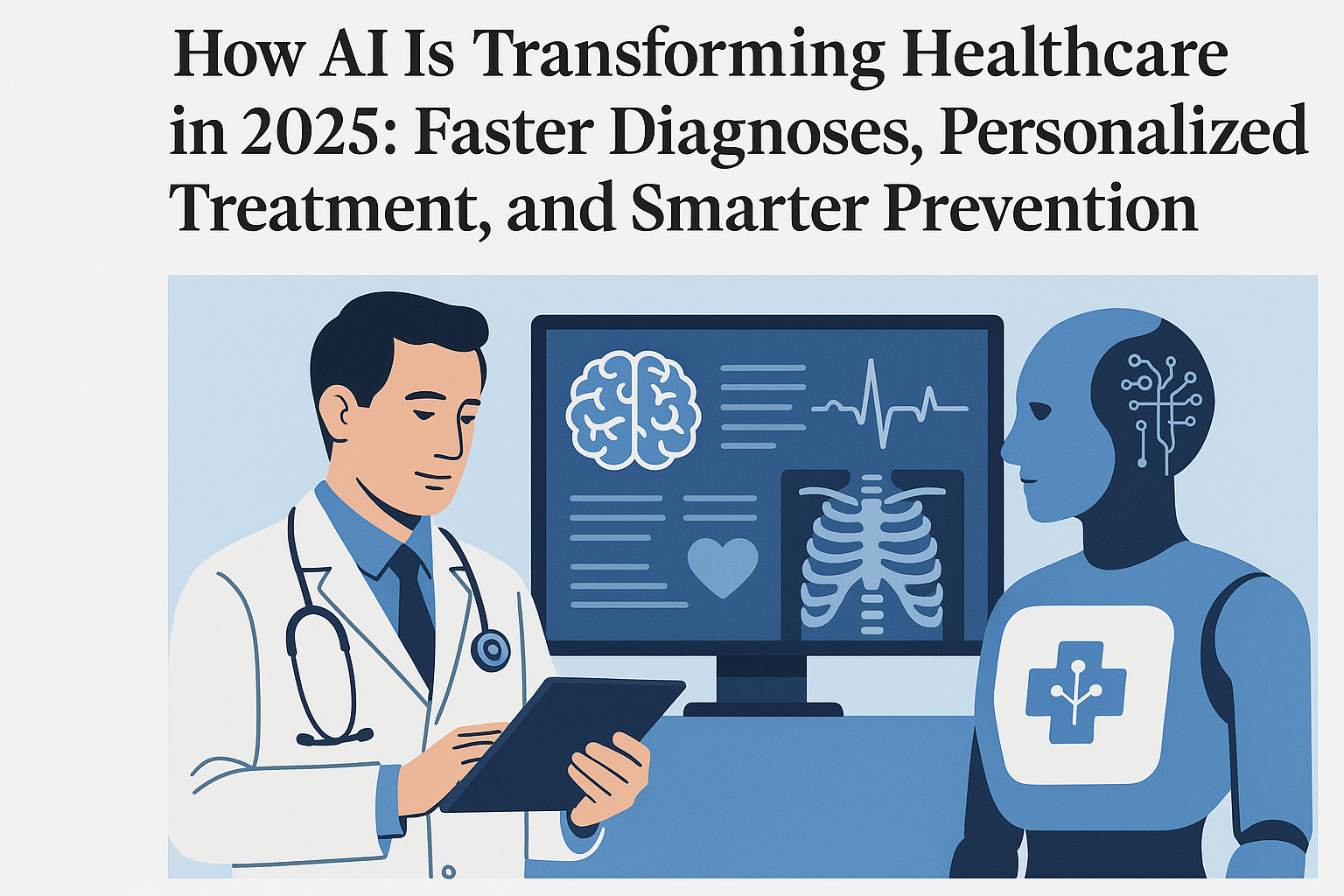
Healthcare in 2025 is undergoing its most dramatic evolution in decades, thanks to artificial intelligence. From early disease detection to personalized treatment planning and at-home monitoring, AI is redefining how patients receive care — and how doctors provide it.
AI isn’t replacing doctors.
It’s empowering them with tools that analyze data faster, more accurately, and with greater predictive power than human capability alone.
AI Diagnoses Diseases Earlier and More Accurately
AI systems now assist clinicians by analyzing:
- X-rays
- MRI scans
- CT scans
- blood tests
- genetic markers
- patient histories
- symptom descriptions
These models detect signs of:
- cancer
- cardiovascular disease
- neurological disorders
- diabetes complications
- chronic inflammation
well before symptoms become severe.
In some fields, such as radiology and dermatology, AI models now match or exceed human-level accuracy when identifying abnormalities.
Personalized Medicine Is Becoming Standard Care
Personalized medicine is no longer experimental — it’s mainstream.
AI analyzes:
- genetic data
- lifestyle patterns
- diet
- medications
- sleep habits
- biomarkers
to create personalized treatment plans for each patient.
This reduces side effects, speeds recovery, and improves long-term outcomes for conditions such as:
- autoimmune diseases
- cancer
- hormonal imbalances
- metabolic conditions
Patients now receive treatment designed specifically for their biology.
AI-Powered Wearables Provide Continuous Health Insights
Wearables in 2025 do far more than count steps.
Today’s devices track:
- heart rhythm irregularities
- sleep cycles
- blood oxygen
- stress levels
- blood pressure
- glucose trends
- respiratory patterns
These devices alert users — and doctors — when abnormalities appear.
This real-time monitoring helps catch dangerous conditions like atrial fibrillation, glucose spikes, anxiety episodes, and sleep disorders before they escalate.
Telehealth + AI = Convenient, Accurate Remote Care
Telemedicine has advanced with AI integration.
Patients can now:
- describe symptoms to an AI triage system
- receive instant medical guidance
- get prescriptions remotely
- have virtual follow-up appointments
- transmit wearable data directly to doctors
- perform at-home tests interpreted by AI
This improves access for rural communities, elderly patients, and busy households.
AI Predicts Health Problems Before They Occur
Predictive analytics allow healthcare systems to anticipate:
- heart attacks
- strokes
- infections
- mental health declines
- chronic disease flare-ups
- medication complications
By analyzing patterns in patient data, AI alerts doctors weeks — sometimes months — before a crisis.
This shift from reactive to proactive healthcare is helping save lives and reduce hospital costs.
Robotics Are Supporting Complex Surgeries
AI-guided surgical robots now:
- assist with precision cutting
- reduce tremors
- map internal structures in real time
- improve surgical accuracy
- shorten recovery time
Minimally invasive robotic surgeries are becoming more widely available across hospitals.
Mental Health Care Is Being Enhanced by AI
AI-powered mental health tools provide:
- mood tracking
- stress analysis
- early warnings for depression
- personalized therapy recommendations
- 24/7 conversational support
Therapists use AI-generated insights to deliver better treatment.
Challenges and Ethical Concerns Remain
Despite breakthroughs, experts warn that healthcare AI must be:
- transparent
- reliable
- unbiased
- secure
- ethically regulated
Data privacy remains a major concern, and human oversight continues to be essential.
The Future of Healthcare Is Human + AI
AI is not replacing doctors, nurses, or specialists — it’s enhancing their capabilities.
Patients receive faster diagnoses, smarter treatments, and more personalized care than ever before.
2025 marks the beginning of a healthcare system that is more predictive, more efficient, and more accessible — powered by the partnership between human expertise and intelligent technology.
Leave a Reply