

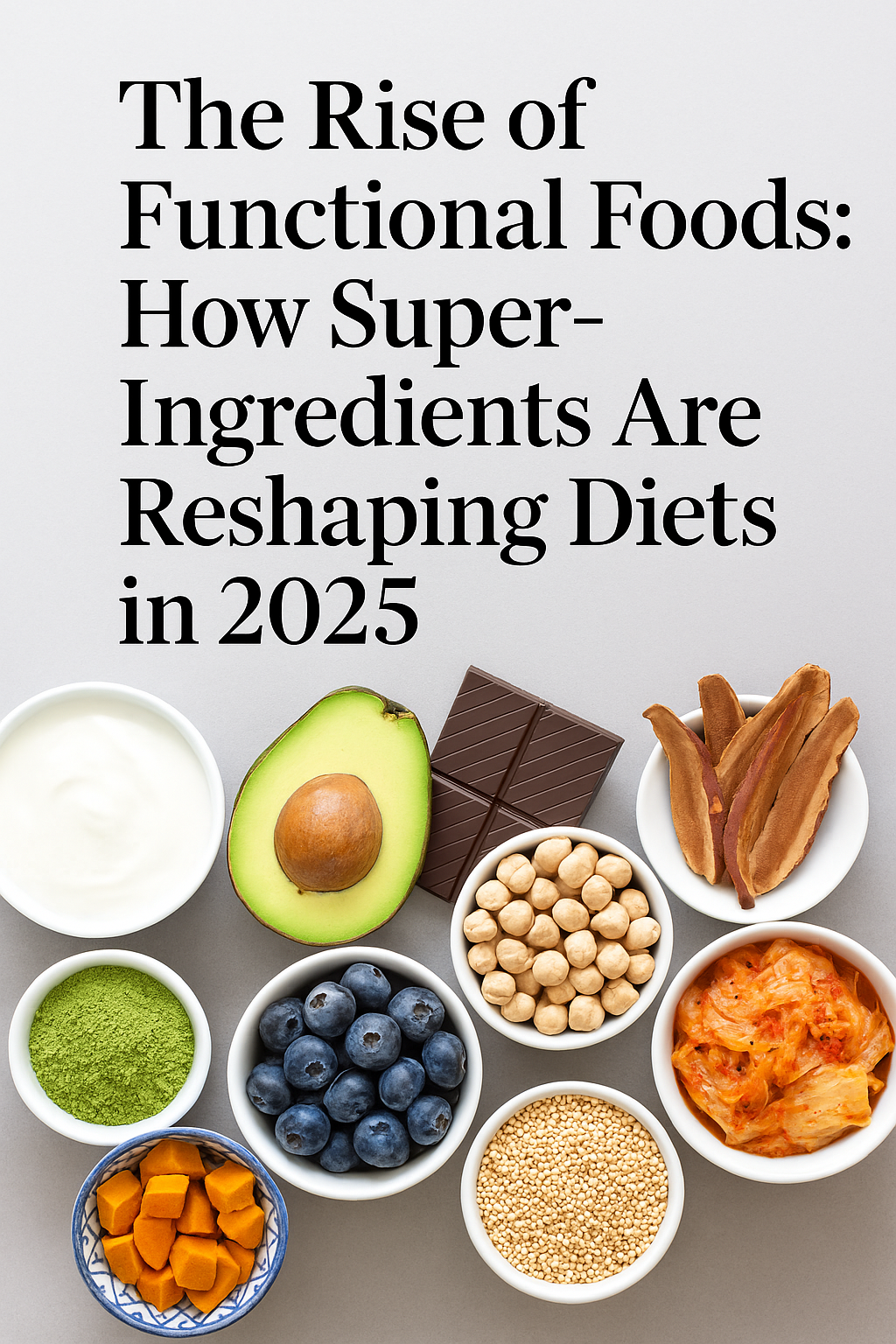
The global food landscape is shifting in a major way — 2025 is officially the year of functional foods. These are everyday foods enhanced with ingredients that provide targeted health benefits, from boosting immunity and improving gut health to increasing focus and reducing stress.
Driven by wellness trends, scientific research, and AI-powered nutrition insights, functional foods are becoming staples in households, cafés, and grocery stores worldwide.
What Are Functional Foods?
Functional foods are nutrient-enhanced ingredients or products designed to support specific areas of health, including:
- gut health
- cognitive function
- immune support
- stress reduction
- sleep quality
- metabolism
They offer benefits beyond basic nutrition, making them a powerful tool for wellness-focused consumers.
Why Functional Foods Are Booming in 2025
1. Health Awareness Has Increased Globally
Post-pandemic lifestyles continue to influence consumer choices. People are more aware of:
- immune function
- stress levels
- chronic inflammation
- metabolic health
Functional foods provide simple, daily ways to improve well-being.
2. AI Nutrition Tools Promote Personalized Eating
Apps and smart wearables now recommend functional foods based on:
- nutrient deficiencies
- sleep data
- microbiome analysis
- blood sugar trends
- activity levels
- stress patterns
These personalized plans help consumers choose foods with measurable benefits.
3. Younger Generations Are Driving Wellness Trends
Gen Z and Millennials prioritize:
- mental clarity
- mood balance
- longevity
- natural ingredients
They’re gravitating toward foods that improve how they feel, not just how they look.
Top Functional Food Trends Dominating 2025
1. Probiotic-Rich Superfoods for Gut Health
Gut-friendly foods are more popular than ever:
- kombucha
- kefir
- miso
- kimchi
- probiotic yogurts
- prebiotic fibers like inulin
A healthy microbiome supports digestion, immunity, and even mood.
2. Adaptogen-Infused Snacks and Drinks
Adaptogens help the body manage stress. Trending adaptogens include:
- ashwagandha
- rhodiola
- maca
- holy basil (tulsi)
- reishi & lion’s mane mushrooms
They appear in teas, protein bars, coffee blends, and wellness shots.
3. Nootropic Foods for Focus and Productivity
With hybrid work continuing, focus-boosting foods are in demand:
- MCT oil
- matcha
- omega-3 rich snacks
- dark chocolate
- ginseng drinks
- fortified nut butters
Nootropics support memory, mental clarity, and sustained energy.
4. High-Protein Plant-Based Meals
Sustainability + wellness = plant-based popularity.
Top sources include:
- pea protein
- lentils
- quinoa
- tempeh
- chickpea pasta
- hemp seeds
Brands are adding plant protein to everything from cereals to desserts.
5. Superfood Powders and Blends
Consumers love convenient boosts they can add to:
- smoothies
- oatmeal
- baked goods
- coffee
Popular blends include:
- spirulina
- moringa
- acai
- turmeric-curcumin mixes
- greens powders with probiotics
How Grocery Stores Are Adapting
Supermarkets now have dedicated sections for:
- functional drinks
- gut-friendly foods
- immunity boosters
- mood-supporting snacks
- high-protein convenience meals
AI-driven product scanners even explain benefits instantly.
The Scientific Backbone: Why Functional Foods Work
Modern research shows that certain ingredients can improve:
- inflammation markers
- blood glucose stability
- stress hormone levels
- digestion speed
- cognitive performance
This evidence gives functional foods long-term staying power.
The Future: Everyday Food With Purpose
Functional foods won’t replace traditional meals — they elevate them.
By blending nutrition with science and convenience, they fit perfectly into fast-paced lifestyles.
In 2025, food isn’t just fuel.
It’s functional, targeted, and personalized to help people feel better every day.
Leave a Reply