

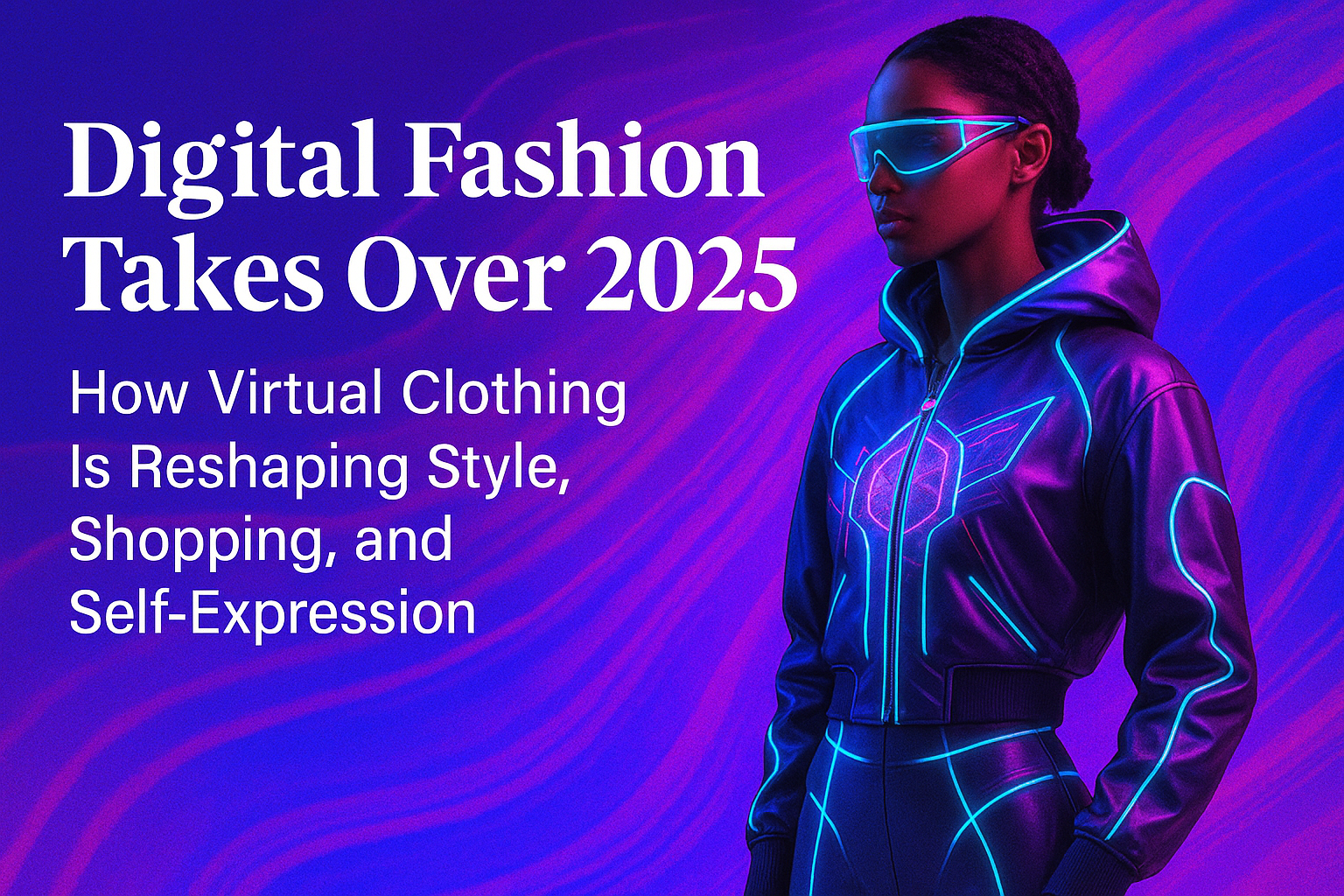
The fashion world is expanding into a new frontier — the digital realm. In 2025, virtual clothing has evolved from a niche curiosity into a global movement, embraced by brands, influencers, gamers, and everyday consumers.
From AI-generated outfits to wearable skins in virtual worlds, digital fashion is becoming a powerful form of self-expression and a major revenue stream for designers. The merger of fashion and technology has created a new industry category where creativity is limitless, sustainability is built-in, and style is no longer confined by physical materials.
What Exactly Is Digital Fashion?
Digital fashion refers to clothing that exists only in digital form. It includes:
- AI-generated outfits
- augmented reality (AR) wearables
- in-game skins and accessories
- virtual runway collections
- digital try-on clothing
- custom 3D garments for avatars
Some consumers buy digital clothing that can be “worn” in selfies or online posts, while others buy outfits for gaming, virtual social spaces, and metaverse platforms.
Why Digital Fashion Is Exploding in 2025
1. The Rise of Virtual Worlds & Avatars
Platforms like Roblox, Fortnite, Meta Horizon, and VR-based social apps have turned digital fashion into a billion-dollar economy. People want their avatars to look as stylish as they do in real life.
2. Zero Environmental Impact
Digital clothing requires:
- no water
- no physical materials
- no shipping
- no waste
This makes it the most sustainable form of fashion ever created.
3. AI Makes Creation Instant and Limitless
Designers (and consumers) can now generate:
- unique outfits
- impossible fabrics
- animated textures
- gravity-defying silhouettes
AI removes traditional physical constraints and opens the door to pure creativity.
4. The Social Media Demand
Influencers now wear digital outfits in photos and videos, allowing endless wardrobe options without physical purchases.
How Brands Are Capitalizing on Digital Fashion
Major labels are fully onboard:
- Gucci Vault sells virtual clothing and accessories.
- Balenciaga designs digital skins for gaming worlds.
- Nike .Swoosh releases virtual sneakers.
- Dolce & Gabbana launched metaverse couture collections.
- Tommy Hilfiger collaborates with digital creators for virtual runways.
Smaller independent digital designers are thriving too, selling unique virtual pieces on platforms like DressX and Zepeto.
Consumers Are Buying Digital Clothing for Multiple Uses
1. Social Media Posts
People purchase digital outfits to appear online wearing avant-garde designs they wouldn’t wear physically.
2. Gaming & Virtual Worlds
Digital skins are status symbols — just like luxury handbags.
3. Virtual Events
Online meetings, conferences, and VR gatherings are becoming fashion moments.
4. Digital Twin Wardrobes
Some brands sell real clothing + its digital version as a bundle.
How Digital Fashion Improves the Shopping Experience
Virtual try-on tools let customers see how an outfit fits before buying the physical version.
These tools:
- reduce returns
- improve sizing accuracy
- enhance customer confidence
- make online shopping more interactive
Retailers report conversion rates increasing up to 30% with AR and digital try-on features.
Challenges Still Exist
Despite rapid growth, digital fashion faces hurdles:
- lack of standardization across platforms
- questions about ownership (files vs. NFTs vs. licensing)
- limited adoption outside younger audiences
- the need for consistent rendering across devices
However, these challenges are shrinking as technology improves.
The Future: A Hybrid Fashion World
By the end of the decade, digital fashion will merge more seamlessly with physical fashion:
- buy a physical item → receive its digital twin
- use AR overlays to layer digital designs onto real outfits
- personalize clothing in real time
- wear animated outfits in VR, AR, and video content
Creativity, sustainability, and technology will define the next chapter of global fashion.
The Bottom Line
Digital fashion is not a fad — it’s the evolution of style.
With limitless creativity, eco-friendly design, and increasing adoption across virtual platforms, 2025 marks the beginning of fashion’s digital era.
Leave a Reply