

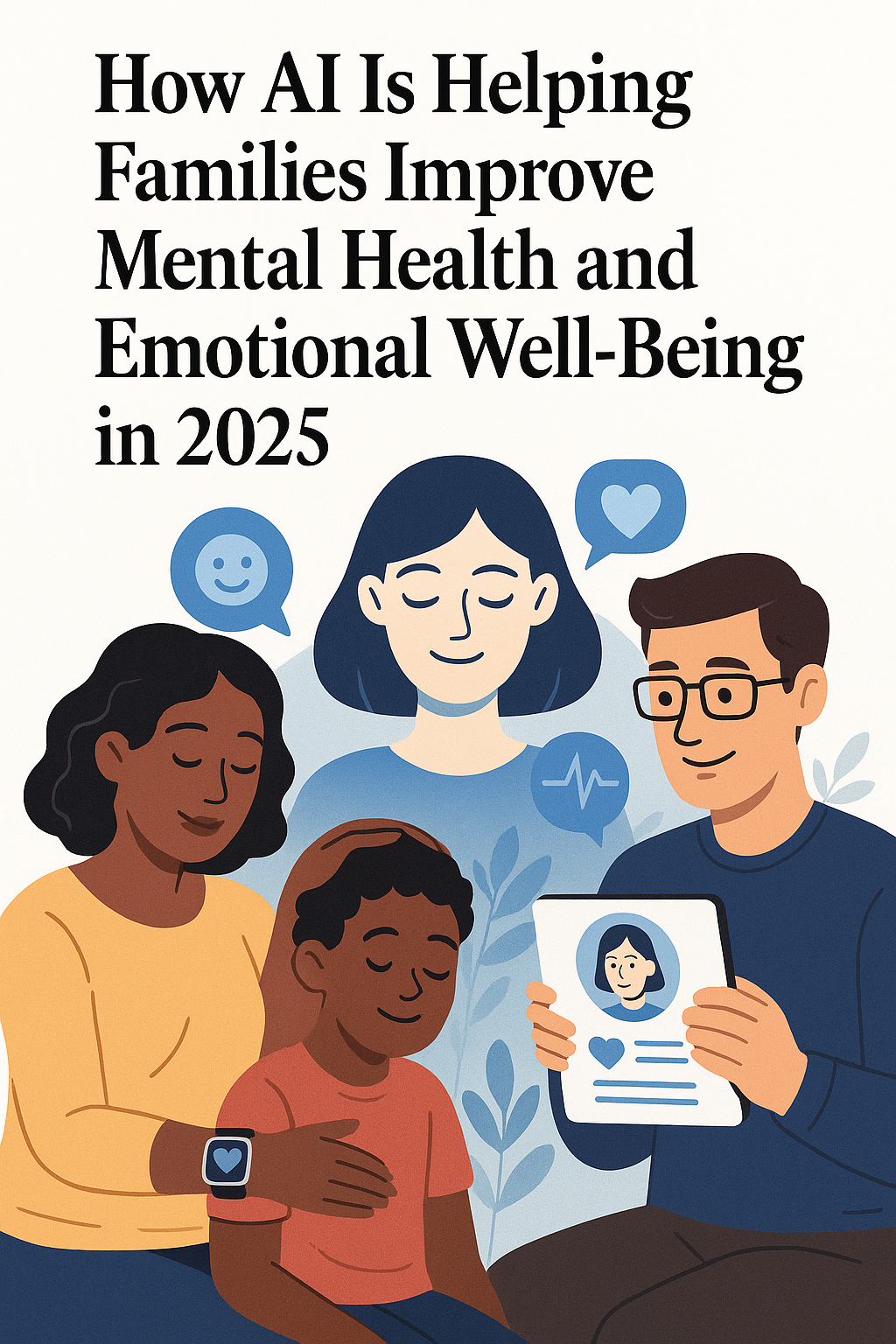
Mental health has become one of the biggest priorities for families in 2025. With rising stress, packed schedules, and increasing digital demands, households are turning to AI-powered wellness tools to help monitor emotional well-being, build healthy routines, and support both parents and children.
These tools don’t replace human connection — but they offer new insights, early warning signals, and personalized guidance that families have never had before.
AI Emotional Check-Ins Are Becoming a Daily Habit
Modern AI systems can now recognize emotional patterns in speech, text, and behavior. Families use these tools to:
- perform daily mood check-ins
- detect early signs of burnout
- track emotional patterns over time
- identify stress triggers
- provide personalized recommendations
Parents say these check-ins help start supportive conversations that might have otherwise been missed.
Mental Health Assistants for Children and Teens
AI tools designed for younger users are helping kids express emotions more comfortably.
These assistants can:
- encourage positive self-talk
- offer coping techniques
- help kids describe feelings
- recognize mood changes
- recommend mindfulness or breathing exercises
For teens who struggle to communicate openly, AI offers a judgment-free space to express themselves.
AI Supports Parents With Stress Management
Parents are also using AI wellness apps to help manage their own emotional health.
These tools provide:
- stress-reduction exercises
- guided meditation
- time-management strategies
- sleep tracking
- reminders for self-care
- burnout early-warning alerts
By supporting parents first, the entire household benefits.
Smart Monitoring for At-Risk Family Members
Families caring for elderly relatives or individuals with mental health challenges rely on AI-based safety tools such as:
- behavior-tracking sensors
- fall detection
- medication reminders
- emergency alert systems
- anomaly detection (e.g., unusual daily routines)
These systems provide peace of mind and allow families to respond quickly if something is wrong.
AI Is Strengthening Family Communication
AI tools are helping families communicate more clearly by:
- summarizing difficult conversations
- suggesting empathetic phrasing
- mediating conflicts using calm prompts
- translating multilingual households
- offering family wellness tips
This creates a more supportive home environment with fewer misunderstandings.
Promoting Healthy Digital Habits
AI helps parents regulate screen time in a balanced way:
- monitoring usage across devices
- blocking harmful content
- setting healthy routines
- providing digital detox reminders
- offering creative offline activities
Families appreciate that these tools help promote healthier tech relationships.
Privacy and Emotional Safety Are Essential
Experts emphasize:
- using family-friendly AI tools
- keeping sensitive data offline when possible
- avoiding over-monitoring children
- combining AI insights with human support
- prioritizing transparency within the household
AI should enhance well-being — not create pressure or invade privacy.
AI Is Becoming a Partner in Family Wellness
In 2025, families are discovering that AI can be a quiet, supportive partner in maintaining emotional balance. By providing personalized insights, structured routines, and real-time guidance, AI helps parents and children navigate stress, communicate better, and build healthier homes.
Technology isn’t replacing support systems — it’s strengthening them.
Leave a Reply