

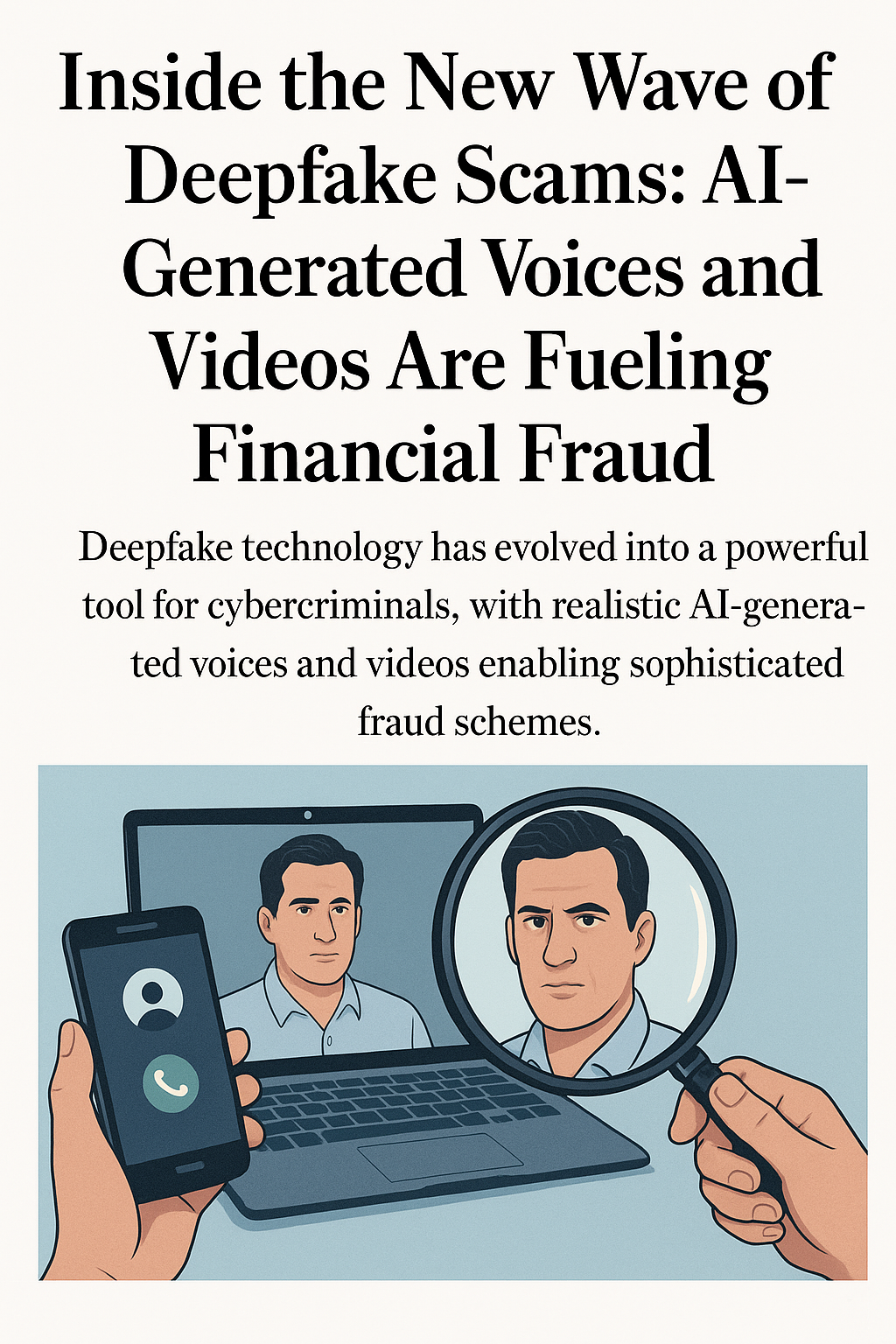
Deepfake technology has evolved from a novelty into a powerful tool for cybercriminals. In 2025, security experts report a dramatic spike in AI-generated voice and video scams, with attackers impersonating executives, employees, and even family members to steal money or sensitive information.
What makes this wave of deepfake fraud especially dangerous is its realism. Modern models can replicate a person’s voice with only a few seconds of audio and generate near-perfect videos that sync facial expressions, tone, and body language.
AI Voice Scams Are Becoming Shockingly Accurate
Cybercriminals are now using AI voice synthesis tools to:
- impersonate CEOs requesting urgent transfers
- mimic employees asking for login resets
- copy family members asking for emergency funds
- replicate government or bank representatives
In one documented case, an employee transferred over $25 million after receiving a voice call from someone who sounded exactly like their company’s CFO.
These scams work because the voice is almost indistinguishable from the real person — including tone, pauses, and emotional inflections.
Deepfake Video Calls Are the Next Major Threat
Attackers are now using deepfake video during:
- Zoom calls
- Teams meetings
- WhatsApp video calls
- corporate presentations
By combining real-time face-mapping models with voice cloning, criminals can appear on camera as a perfect replica of the person they are impersonating.
Security specialists warn that these attacks are extremely difficult to detect without advanced verification tools.
Social Engineering + AI = A Dangerous Combination
Deepfake scams are most effective when combined with traditional social engineering:
- urgent emails
- fraudulent invoices
- manipulated documents
- spoofed phone numbers
- insider information gathered from social media
AI enhances these attacks by providing a convincing “human layer” that people instinctively trust.
Businesses Are the Primary Targets
Corporate fraud involving deepfakes is rising sharply because companies often rely on fast communication and remote management.
Common scenarios include:
- fake CEO asking finance to authorize a wire transfer
- impersonated IT staff requesting remote access
- fake HR representative asking for employee data
- fraudulent vendor calls requesting payment updates
In multinational companies, where leaders often communicate remotely, these scams are particularly effective.
How to Protect Against Deepfake Fraud
Security experts recommend a multi-layer approach:
1. Verification Procedures
Organizations should implement secondary verification for any request involving:
- money movement
- account access
- sensitive data
This includes written confirmation, two-person approval, or internal ticket systems.
2. Employee Awareness Training
Staff must be taught to:
- distrust unexpected calls
- verify identities independently
- avoid sharing personal voice samples publicly
3. AI-Based Detection Tools
Deepfake detectors analyze:
- facial inconsistencies
- mismatched lighting
- audio artifacts
- unnatural blinking or microexpressions
While not perfect, they help identify suspicious content.
4. Passwordless Authentication
Using hardware keys, biometrics, or device-based authorization reduces risks from impersonation.
The Future Threat Landscape
As deepfake generation tools become even more sophisticated and easier to access, experts predict these scams will become one of the most common forms of cybercrime within the next two years.
The battle ahead will require:
- stronger verification protocols
- AI-driven defense systems
- public awareness
- international cooperation
Deepfakes are no longer just a digital curiosity — they are a serious cybersecurity threat with real financial and personal consequences.
Leave a Reply