

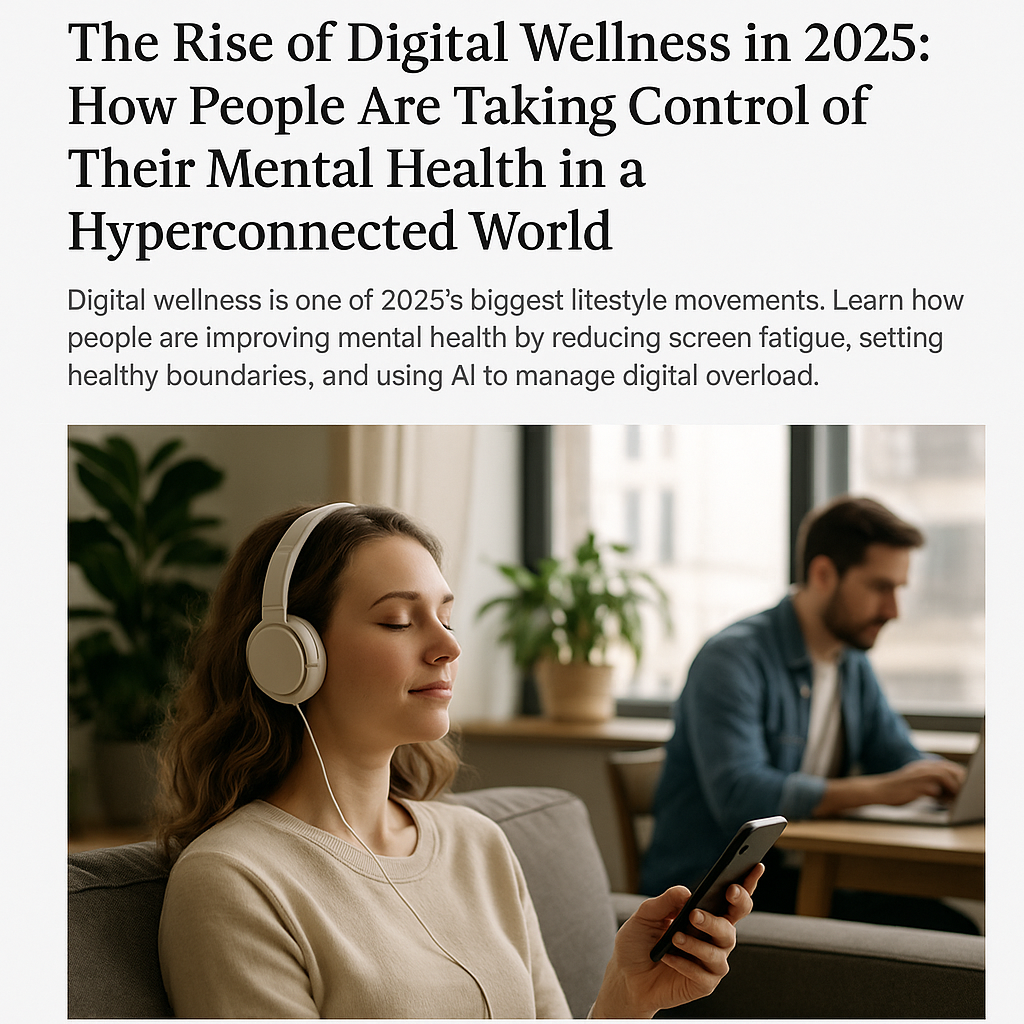
2025 has become the year of digital wellness — a lifestyle shift born from years of nonstop notifications, algorithmic feeds, and growing digital fatigue. With more people than ever working remotely, consuming online content, and living through screens, the need to balance mental health with technology use has reached a tipping point.
Instead of abandoning tech, the world is learning how to use it intentionally — and the results are transforming everyday life.
1. People Are Setting Stronger Digital Boundaries
The average adult now receives hundreds of digital interruptions each day.
To regain control, more people are adopting:
- strict “no-phone” morning routines
- notification cutoffs after 8 p.m.
- screen-free weekends
- mindful app usage tracking
- digital quiet zones at home
These habits reduce stress, improve focus, and strengthen mental clarity.
2. AI Tools Are Helping Reduce Digital Overload
AI isn’t just creating content — it’s filtering and simplifying it.
Popular 2025 tools include:
- AI news summarizers to replace doomscrolling
- priority inbox filters that highlight important messages
- mental health copilots that detect stress patterns
- automated workload organizers
- AI phone assistants that block useless notifications
People are using AI to protect their attention, not steal it.
3. Remote Work Is Pushing People Toward Healthier Routines
The hybrid-work lifestyle is reshaping wellness habits.
People now incorporate:
- midday walks
- 5-minute breathing breaks
- ergonomic home office setups
- standing desk sessions
- micro-meditations between meetings
Employers are even offering digital balance programs as part of health benefits.
4. Sleep Optimization Is Becoming a Lifestyle Priority
Digital overload has damaged sleep patterns for years — until now.
2025 wellness habits include:
- night modes that activate automatically
- AI sleep coaches
- blue-light filtering glasses
- strict pre-sleep digital curfews
- smart bedroom lighting routines
Sleep is finally being treated as a pillar of health.
5. Mindfulness Apps Are Replacing Social Media During Downtime
People are shifting away from passive consumption and turning toward:
- meditation apps
- gratitude journals
- guided reflection tools
- positive reinforcement platforms
- breathing timers
The goal is to replace mindless scrolling with intentional rest.
6. Real-World Socializing Is Becoming More Meaningful
Digital wellness encourages deeper, offline interactions.
Trends include:
- phone-free dinners
- weekend meetups
- community events
- outdoor group activities
- hobby-based friendships
Quality > quantity is becoming the new social standard.
7. Minimalist Phones and Wearables Are Gaining Popularity
A new category of “low-distraction devices” is emerging.
These include:
- minimal smartphones
- simplified operating systems
- pocket-sized AI assistants
- wellness-first smartwatches
They offer essential tools without addictive features.
8. Content Consumption Is Shifting Toward Intentional Learning
Instead of scrolling endlessly, people prefer:
- curated newsletters
- topic-specific audio summaries
- short educational videos
- long-form deep dives
- AI-personalized learning paths
Content is becoming a tool for growth — not escape.
9. Work-Life Boundaries Are Being Redefined
People are finally establishing healthy limits:
- no work email on personal phones
- scheduled downtime
- “do not disturb” focus blocks
- mandatory break periods
- separate digital profiles for work/home
Digital wellness is making productivity sustainable, not exhausting.
10. Digital Wellness Is Becoming a Global Movement
Experts predict this movement will grow throughout the decade as mental health becomes a worldwide priority.
The future includes:
- healthier digital ecosystems
- AI systems designed for balance
- more privacy-focused tools
- built-in digital balance features in devices
- mental-health-first design principles
The world is learning how to live with technology — without letting it take over.
The Bottom Line
Digital wellness in 2025 isn’t about abandoning technology.
It’s about using technology purposefully, protecting mental space, and building healthier, more balanced routines.
People are taking back control — and the result is a smarter, calmer, and more intentional lifestyle.
Leave a Reply