

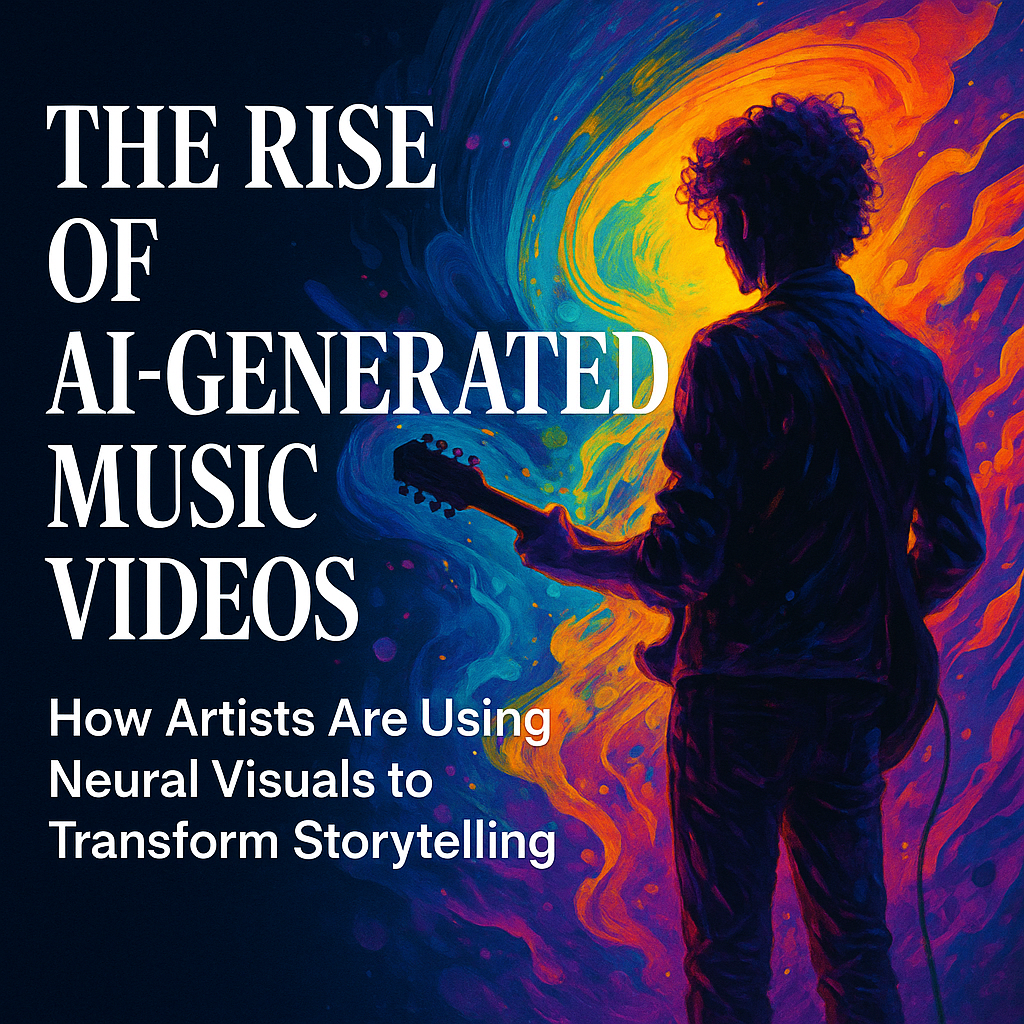
A new wave of musicians, filmmakers, and digital artists is reshaping the music industry by using AI-generated visuals to create music videos that were once impossible without large crews or hefty budgets. Powered by generative video models and neural motion engines, these new creations blur the line between animation, visual art, and cinema.
Once a niche experiment, AI music videos are now appearing on major platforms, featured in mainstream releases, and gaining millions of views — signaling a major shift in how artists approach storytelling.
AI Tools Behind the Movement
Artists are now using a new ecosystem of advanced visual tools, including:
- Runway Gen-2 / Gen-3
- Pika Labs
- Stable Video
- Sora-style motion diffusion models
- Kaiber
- Adobe’s Firefly video tools
These systems allow creators to:
- generate scenes from text
- animate static images
- blend real footage with neural motion
- create surreal transitions
- design stylized or cinematic worlds
What once required a team of animators can now be produced by a single artist with a laptop.
Lower Costs, Higher Creativity
Traditional music video production can cost anywhere from $10,000 to $500,000 — depending on the crew, equipment, and location.
AI dramatically reduces:
- production costs
- location requirements
- editing time
- rendering complexities
Artists can experiment with:
- shifting art styles
- dream-like sequences
- cosmic landscapes
- glitch aesthetics
- fantasy or sci-fi environments
- hyper-stylized character animations
This democratizes the music video space, allowing newcomers to compete with major studios.
A New Style of Visual Storytelling
AI-generated music videos often feature:
- fluid morphing scenes
- abstract visual metaphors
- evolving environments
- aesthetic-driven narratives
Many artists use these tools to convey emotions or themes visually instead of relying on traditional linear storytelling. The result is a new genre of music video — one that feels dynamic, interpretive, and artistically expressive.
Collaboration Between Artists and AI
While the technology is powerful, artists emphasize that AI is not doing the job alone.
Creators guide the process by crafting:
- prompts
- storyboards
- keyframes
- thematic sequences
- visual references
AI then accelerates execution, turning concepts into animated scenes.
This creates a hybrid workflow where human creativity sets the vision and AI handles the heavy lifting.
The Future of AI Music Videos
As video models continue to improve, we will soon see:
- fully coherent AI narratives
- real-time video generation
- customizable character actors
- consistent animation styles across long sequences
- voice + video + motion integration
The result will be music videos that feel increasingly cinematic and personalized — potentially even generated live during performances.
AI is not replacing film crews; it’s giving independent artists access to creative freedom that was once financially out of reach.
Leave a Reply