

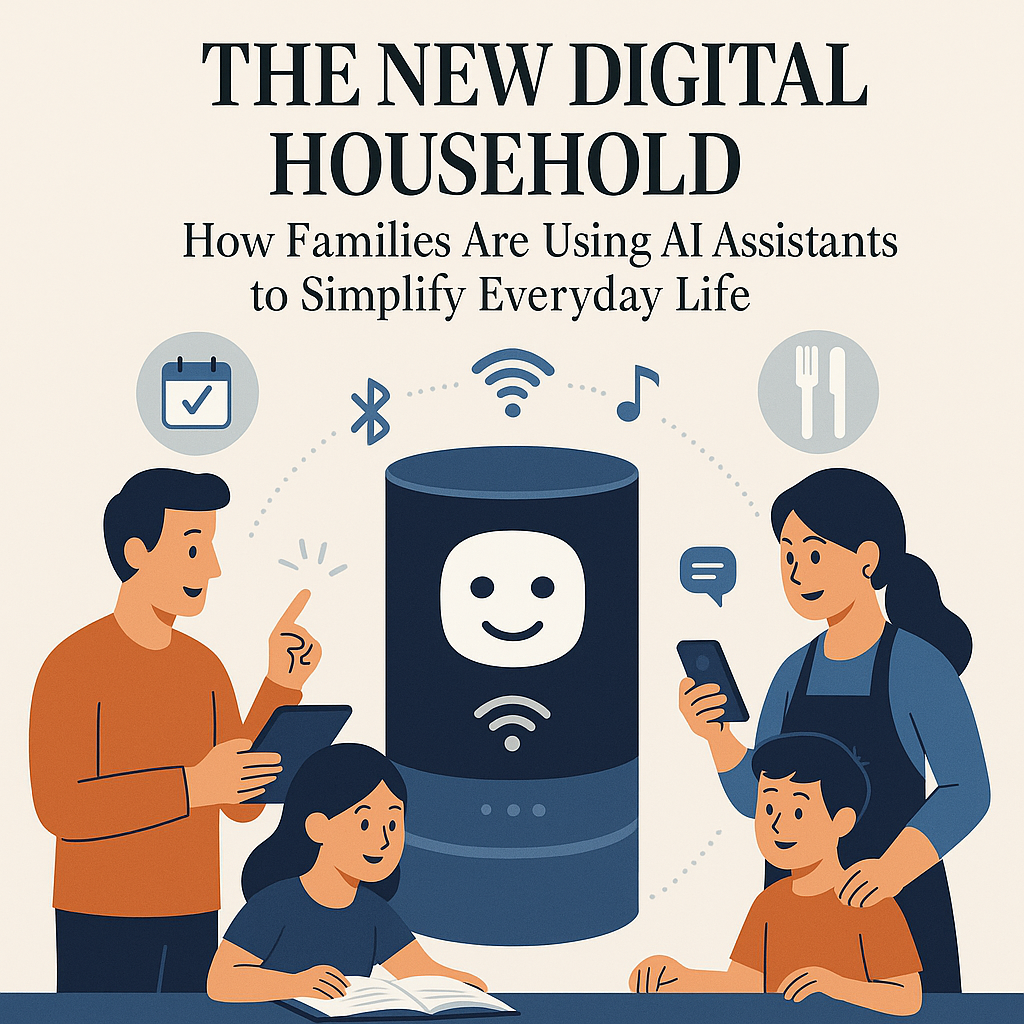
In 2025, AI assistants have become essential household tools—helping families stay organized, manage tasks, and improve day-to-day communication. Once limited to basic voice commands, modern AI systems now understand context, predict needs, and support multiple users in a shared environment.
From morning routines to evening schedules, AI is quietly becoming the invisible helper that keeps the modern family running smoothly.
AI Helps Coordinate Busy Schedules Effortlessly
One of the biggest challenges families face is staying on top of appointments, school deadlines, work tasks, and extracurricular activities. AI assistants now handle these complexities by:
- syncing all family calendars
- organizing events by priority
- alerting parents to schedule conflicts
- generating optimized daily plans
- sending reminders for school projects or chores
Some systems even adjust schedules automatically based on weather, travel delays, or updated commitments.
A Smarter Way to Manage Chores and Responsibilities
Families, especially those with kids, use AI assistants to reduce the stress of managing household responsibilities.
AI systems can:
- assign age-appropriate chores
- gamify task completion
- reward consistent habits
- keep track of who did what and when
- remind kids of responsibilities in a friendly tone
Parents say this reduces arguments and encourages accountability.
AI-Powered Meal Planning Saves Time (and Money)
Meal planning is one of the most time-consuming parts of family life. AI assistants now help by:
- generating weekly meal plans
- suggesting recipes based on dietary preferences
- tracking expiration dates
- auto-creating grocery lists
- comparing local store prices
With rising food costs, families appreciate AI’s ability to optimize budgets and prevent waste.
Education Support That Adapts to Each Child
AI has become a valuable homework helper and tutoring assistant.
These tools help children with:
- math problem breakdowns
- reading practice
- research summaries
- vocabulary building
- science explanations
- personalized skill assessments
Parents report increased confidence and improved grades thanks to adaptive learning models.
Improving Family Communication
Modern AI assistants support clearer, more effective communication by:
- translating conversations in multilingual homes
- recording and summarizing family meetings
- sending voice reminders to specific family members
- assisting children with speech practice
- organizing important household notes
This is especially helpful in diverse or multi-generational families.
Smart Home Integration Makes Daily Life Easier
AI assistants connect with home devices to provide:
- automated lighting schedules
- temperature control
- safe appliance management
- real-time hazard alerts
- customized routines for bedtime, morning, or study time
These features make homes safer, more efficient, and more comfortable.
Privacy and Balance Still Matter
Experts caution families to:
- limit unnecessary data sharing
- use parental controls
- maintain offline activities
- set boundaries for device usage
- teach kids how AI works
Healthy digital habits remain essential for family well-being.
AI Has Become Part of the Modern Family Toolkit
Families in 2025 are not replacing personal connection with technology—they’re enhancing daily life with smarter tools. AI assistants are helping parents save time, helping children learn more efficiently, and giving households the support they need to stay organized in a busy world.
The digital household is no longer a future concept.
It’s the new normal.
Leave a Reply