

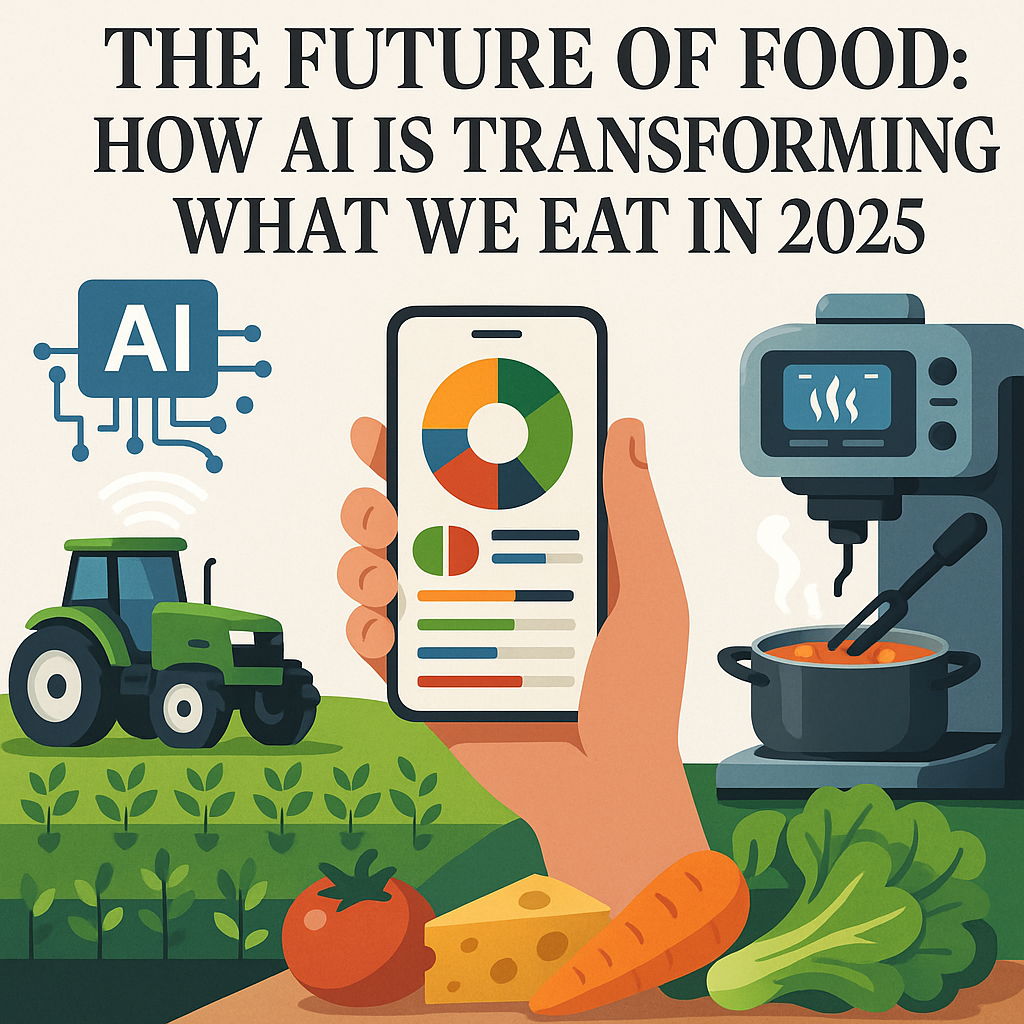
What we eat — and how our food is produced — is changing faster than ever. In 2025, artificial intelligence is deeply integrated into agriculture, nutrition planning, restaurant operations, and even home cooking. The result is a global food landscape that is smarter, healthier, and more sustainable.
From AI-personalized meal plans to automated farms and robotics-powered kitchens, the future of food is becoming a seamless blend of technology and taste.
AI in Agriculture: Faster, Cleaner, Smarter Food Production
Modern farms now use AI to improve efficiency and sustainability.
AI-driven farming includes:
- precision irrigation
- automated pest detection
- soil health monitoring
- crop disease prediction
- yield forecasting
- autonomous tractors and drones
This has led to:
- reduced water usage
- fewer chemical inputs
- higher crop quality
- more consistent supply chains
AI-driven “smart farms” can produce up to 30% more yield using fewer resources.
Personalized Nutrition Is Becoming Mainstream
AI nutrition apps now tailor meal plans using data from:
- sleep patterns
- activity levels
- glucose monitoring
- allergies
- dietary preferences
- long-term health goals
This allows users to receive daily AI-generated meal suggestions, grocery lists, and portion recommendations — all personalized to their unique biological profile.
AI-Powered Kitchens Are Changing How We Cook
Home kitchens are becoming smarter, using AI to:
- suggest recipes based on ingredients you have
- track food expiration dates
- adjust oven and stove settings automatically
- guide cooking step-by-step
- measure portions accurately
- monitor cooking progress with vision sensors
Some households now use robotic cooking systems that can prepare full meals independently.
Restaurants Are Using AI to Improve Both Food and Service
Restaurants worldwide are adopting AI to boost efficiency and enhance dining experiences.
AI in restaurants includes:
- automated inventory tracking
- predictive ingredient ordering
- AI-powered menu optimization
- robotic chefs and servers
- dynamic pricing based on demand
- customer preference analysis
This leads to fresher ingredients, reduced waste, and smoother operations.
Food Delivery Is Becoming Fully Autonomous
The delivery ecosystem has evolved beyond human couriers.
Now powered by:
- AI route optimization
- drone delivery
- autonomous vehicles
- temperature-controlled smart containers
These systems ensure food arrives faster and fresher, even during peak hours.
The Rise of AI-Generated Recipes
AI is now a creative partner in the kitchen.
Recipe-generation models help:
- create new flavor combinations
- modernize traditional dishes
- adapt recipes for dietary restrictions
- reduce ingredient waste
- scale meals for families
Chefs are using AI to experiment with fusion dishes that would have been difficult to conceptualize manually.
Sustainable Food Practices Driven by AI
AI helps track and reduce environmental impact through:
- waste monitoring
- carbon footprint analysis
- optimized delivery routes
- smart packaging systems
- resource-efficient manufacturing
These technologies allow the food industry to move closer to global sustainability goals.
The Future: Smarter Eating for a Smarter World
AI will continue to influence how we:
- grow food
- cook meals
- shop for groceries
- manage nutrition
- experience dining
The next generation of food will be more personalized, more sustainable, and more efficient — all driven by technology that understands our needs.
Leave a Reply