

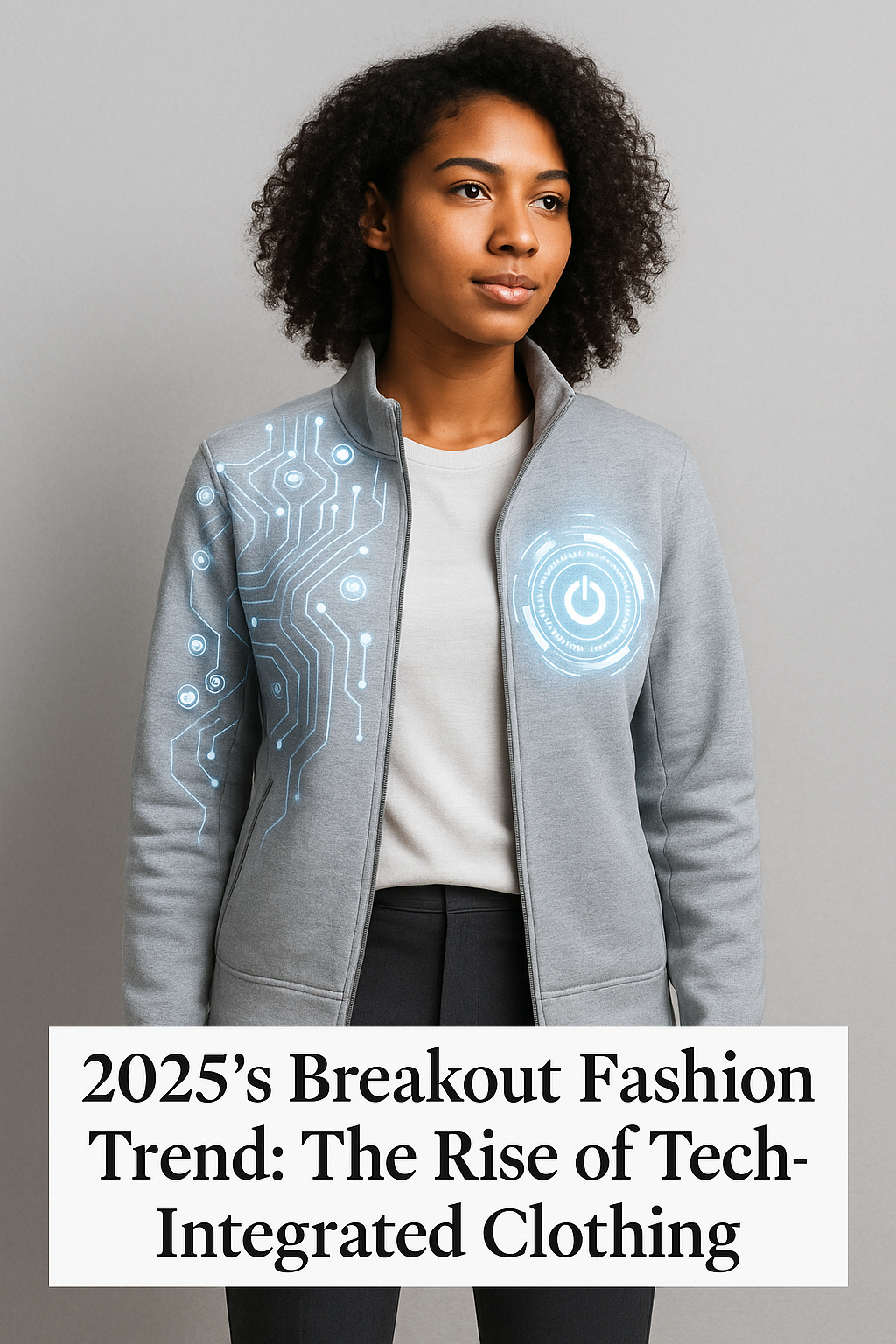
Fashion and technology have been merging for years, but 2025 marks a tipping point — tech-integrated clothing has gone mainstream. Once considered “futuristic,” smart fabrics and AI-enhanced designs are now appearing on runways, in streetwear collections, and even in everyday wardrobe basics.
From self-adjusting fits to temperature-regulating materials and AI-guided personalization, clothing is becoming more intelligent, more sustainable, and more functional than ever.
What Is Tech-Integrated Clothing?
Tech-integrated clothing refers to garments that incorporate digital or smart technology into their design. This includes:
- adaptive fabrics that change temperature or texture
- biometric sensors woven into clothing
- apparel that self-adjusts for comfort
- AI-powered personalization features
- sustainable materials backed by data-driven lifecycle monitoring
This new wave of fashion focuses on function + aesthetics rather than just style alone.
Why Tech Fashion Is Exploding in Popularity Now
1. AI Is Changing How Clothing Is Designed
Fashion brands are using AI to:
- predict trends
- recommend ideal fits
- simulate fabric movement
- design garments in minutes
- test styles across diverse body types
This reduces waste and speeds up production.
2. Sustainability Is Driving Smarter Materials
Consumers demand eco-conscious fashion.
Tech-integrated fabrics help by:
- reducing microplastic shedding
- optimizing dye usage
- tracking garment lifecycle data
- improving durability
This creates clothing that lasts longer and pollutes less.
3. Comfort and Health Are Becoming Priorities
Smart clothing can now:
- monitor posture
- track heart rate
- regulate body temperature
- adjust compression for athletic support
Wellness and fashion are merging into one.
Top Tech-Integrated Trends Dominating 2025
**1. Temperature-Adaptive Jackets
These jackets warm or cool automatically based on:
- outdoor temperature
- body heat
- movement
Great for travel and outdoor wear.
2. AI-Tailored Shirts & Pants
Using body scans or photos, AI generates:
- precise measurements
- ideal fabric stretch
- adjustments for posture
- personalized cuts for comfort
This leads to a perfect fit without traditional tailoring.
3. Sustainable Smart Fabrics
These materials include:
- self-cleaning fibers
- water-repellent organics
- recycled tech-blends
- low-consumption dye fabrics
Cleaner production = cleaner fashion.
4. Biometric Fitness Apparel
Popular with athletes, these garments track:
- heart rate
- muscle fatigue
- hydration
- breathing patterns
The data syncs with health apps in real time.
Which Brands Are Leading the Tech-Fashion Movement?
- Nike – performance wear with smart fabric tech
- Under Armour – biometric athletic clothing
- Uniqlo – temperature-adaptive everyday basics
- Louis Vuitton – luxury wearable tech accents
- AURA Techwear – futuristic streetwear with built-in sensors
Startups are also revolutionizing the space with eco-friendly smart materials.
How Consumers Are Embracing the Trend
Fashion shoppers love tech-integrated clothing because it is:
- functional
- sustainable
- durable
- customizable
- stylish without being flashy
It solves real lifestyle needs — making it a natural next step for the fashion market.
The Future of Fashion Is Smart and Sustainable
Tech-integrated clothing is not a passing trend.
It’s the beginning of a fashion evolution where:
- comfort
- health
- sustainability
- personalization
- technology
blend into everyday style.
By 2030, analysts predict that 1 in 3 clothing items will include some form of smart technology.
Fashion’s future is here — and it’s smarter than ever.
Leave a Reply